PART 1

“Mommy… please don’t let Daddy lock me up again.”
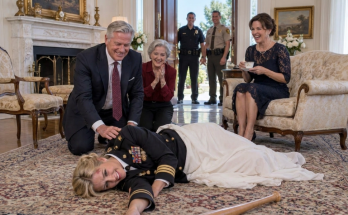
I stood frozen right in front of the small white casket while my heart completely stopped. For two painful days, I had been repeating to myself that my six-year-old daughter, Penelope, was really gone. My ex-husband, Maxwell, had called me out of nowhere to claim that a sudden respiratory attack had taken her during her sleep. The hospital staff refused to let me see her body, and they completely denied my requests for her full medical records. When I fiercely demanded a second independent review, his mother, Beatrice, publicly accused me of trying to turn a tragic funeral into a bitter divorce scandal.
Yet that fragile voice had clearly come from inside the sealed box.
“Penelope… is that you?” I whispered, leaning down as my hands began to tremble violently.
My little girl’s eyelids flickered open, and I quickly yanked open the inner velvet lining of the casket. My lungs locked up because she was incredibly pale, drenched in cold sweat, and barely breathing. When I gently grabbed her tiny hands, I discovered something even more horrifying than the fake death itself. Her small wrists were tightly bound to the wooden base of the casket with heavy plastic zip ties and two metal padlocks.
“Mommy… I am so cold,” she whimpered, staring up at me with blurry eyes.
I did not break down crying because a sudden rush of fierce adrenaline turned my fear into pure clarity. Three years ago, Maxwell had successfully gained sole legal custody by convincing the judge that my demanding career as an active-duty military doctor required me to be absent far too often. He had brought fake character testimonies, biased psychological reports, and even aggressive statements from Beatrice to paint me as an unfeeling mother. I had fought every single court decision with everything I had, but the family law judge eventually sided with him anyway.
Right after that verdict, the endless stream of cruel excuses began. Maxwell constantly claimed that Penelope was too sick to talk, or that she simply did not want to see me anymore, or that her private child therapist strongly advised keeping a healthy distance. His new girlfriend, Charlotte, always answered my frantic phone calls and acted as if she were the child’s true mother.
Then, two days before this nightmare funeral, Maxwell cold-heartedly informed me of her passing and arranged a rushed cremation with suspicious speed. Looking at my breathing child inside that box, I finally understood the terrifying truth behind his hurry.
I carefully checked Penelope’s white lace dress and immediately noticed several fresh red needle marks along her left forearm.
“Sweetheart, who did this to you?” I asked, keeping my voice as steady as possible.
“Daddy said it was special medicine to help me sleep for a long time,” Penelope whispered softly while struggling to stay conscious. “Grandma would hold me down real tight, and Charlotte would always lock the heavy door.”
I searched frantically beneath the satin cushion until my fingers caught a small metal key taped securely to the bottom wood. I quickly unlocked the padlocks, cut the thick straps, and pulled her frail body into my arms.
Suddenly, heavy footfalls echoed down the marble hallway outside the room.
“Gwen?” Maxwell shouted angrily as he pushed the curtain aside. “What on earth are you doing over there?”
I immediately scooped Penelope into my arms, ducked into the adjoining prep room, locked the heavy wooden door behind us, and dialed emergency services on the wall phone.
“My six-year-old daughter was declared dead forty-eight hours ago, but she is alive right now,” I told the dispatcher in a sharp tone. “She was heavily sedated and physically chained inside her own casket, so I need an emergency ambulance and police squad right away at the Fairview Mortuary in Columbus.”
On the other side of the locked door, Maxwell began pounding furiously against the wood.
“Open this door right now, Gwen!” he yelled.
Beatrice shouted right behind him, her voice loud enough for the emergency operator to hear clearly.
“Nobody was supposed to open that casket before the fire started!” Beatrice screamed.
Penelope squeezed her little arms tightly around my military uniform.
“Mommy… Daddy told me that if I slept for a long time, he wouldn’t have to pay Grandpa back all that money,” she murmured weakly.
An icy cold feeling washed over my entire stomach. My father had established an untouchable multi-million dollar trust fund for Penelope to secure her elite education and future living expenses. Because Penelope was still a minor, Maxwell had managed to retain temporary legal authority over the trust distributions as her residential parent.
The loud police sirens began wailing in the distance outside the building. I thought I had just uncovered the absolute worst crime my ex-husband could commit, but he had no idea that the police would soon discover something inside his mansion that would turn this attempted murder into a much bigger nightmare.
PART 2
Penelope arrived alive at the emergency room of the Walter Reed Military Medical Center, but the head physicians were deeply concerned. The lab results confirmed a lethal cocktail of heavy sedatives in her bloodstream, showing clear signs that she had been forcibly given high doses over several consecutive days.
While the medical team rushed to stabilize her vitals, detectives from the Columbus Police Department completely secured the funeral house. The officers separated Maxwell, Beatrice, and Charlotte into different interrogation rooms so they could take their statements independently. All three suspects immediately started giving completely conflicting stories.
“This is all just a terrible medical misunderstanding!” Maxwell shouted at the lead detective.
“The wrist straps were only placed there to keep the body from moving during transport,” Beatrice claimed coldly without showing a single tear.
“I never saw anyone tie that little girl up,” Charlotte swore while weeping nervously.
Their elaborate lie began to collapse when a nurse discovered a thick chemical patch stuck to my daughter’s back. The serial number on the medical patch was easily traceable directly to a commercial pharmacy distribution chain.
An hour later, the local prosecutor obtained an emergency warrant to raid Maxwell’s private estate in the suburbs of Dublin. I was standing right outside the intensive care unit when Detective Miller approached me with a heavy expression.
“Colonel Gwen, we need to talk about what we just uncovered at the house,” he said softly.
“What did your team find in there?” I asked, bracing myself for the worst.
He handed me several clear photographs taken inside the dark basement. The images showed a hidden, soundproofed room behind a false wall, equipped with a child’s bed, remote security cameras, and a heavy electronic deadbolt that could only be operated from the outside hallway. On a wooden table inside, officers found prescription bottles of the exact same sedative found in Penelope’s blood.
However, the photos revealed something far more sinister than just a holding room. Scattered across a small desk were school notebooks belonging to a little girl named Harper Davis, who had mysteriously vanished three months ago.
I instantly recognized the name from local news broadcasts. Her father, a prominent developer named Lucas Davis, had filed a massive fraud lawsuit against Maxwell’s construction firm for embezzling millions in advance investments.
“Was little Harper inside that room?” I asked, my voice shaking with sudden fury.
“We strongly believe she was kept there for weeks,” Detective Miller replied, pointing to another photo. “We found her hair strands, her clothing, personal drawings, and her school ID bracelet right there. We also recovered a set of forged foreign passports meant to smuggle a child out of the country under a fake identity.”
My stomach churned instantly. Right at that moment, my father, retired General Franklin Vance, walked briskly down the hallway toward us. He did not bring his usual security detail or offer any grand military speeches. He simply carried the broken look of a grandfather who realized his massive wealth had inadvertently placed a target on his granddaughter’s back.
“It was always about the trust money, Gwen,” my father said, his voice deep with guilt. “Maxwell was facing total financial ruin from his failed business deals. If Penelope died while he was still her legal custodian, he could legally attempt to seize control of the trust assets during the probate process.”
“Attempt to seize it?” I asked.
“Yes, it wasn’t an automatic transfer, but he found corrupt people willing to forge the legal documents for a cut,” my father explained.
The police quickly tracked down Dr. Samuel Evans, the corrupt physician who had officially signed Penelope’s death certificate. He happened to be Charlotte’s older brother. According to hospital access records, Dr. Evans had never actually stepped foot inside the room to examine Penelope before signing off on her passing.
Then another chilling detail emerged from the bank records. Just three weeks earlier, Maxwell had formally requested certified copies of the trust agreement, the life insurance policies, and Penelope’s official birth certificate. He had even met with an unscrupulous lawyer to ask how to file emergency probate claims in the event of a minor’s sudden death.
Everything had been meticulously calculated from the start.
Just as the sun began to rise, another detective walked rapidly down the corridor holding his phone.
“We just located Harper Davis!” the officer announced loudly to the room.
I stood up straight away. “Is she alive?”
The officer paused for a moment before answering. “Yes, she is alive and safe. A tactical unit found her at a secluded rental cabin near Cincinnati. The caretaker we arrested at the scene just gave a full confession, and she claims Maxwell wasn’t the master planner giving the orders.”
I looked back through the glass window where Penelope was sleeping under the glow of the heart monitors. If my ex-husband was not the primary mastermind behind this whole scheme, then someone else in that family had planned this long ago.
The name the caretaker had just given to the police was the absolute last person I expected to hear.
PART 3
The woman holding Harper hostage was named Martha Higgins, a fifty-eight-year-old former private nurse. Officers arrested her at the Cincinnati property, where they rescued the poor girl in a state of severe dehydration and deep sedation, fully convinced that her family had abandoned her forever.
When the lead prosecutor demanded to know who was paying her cash salary, Martha did not point her finger at Maxwell.
“It was Mrs. Beatrice,” Martha confessed without hesitation.
My ex-husband’s mother had masterminded the entire operation.
For a long moment, I thought my ears were playing tricks on me. Beatrice had always been insufferably cruel to me throughout my marriage. During the ugly custody battle, she told the court that I preferred my military uniform over being a proper mother. She constantly blocked my scheduled visitation days, read through all my private letters to Penelope, and openly claimed that a child needed a normal traditional family rather than a mother who spent her life between emergency deployments and military hospitals.
Yet there was a massive gulf between being an unpleasant mother-in-law and organizing child kidnappings, drugging little girls, and arranging the cold-blooded murder of her own granddaughter.
Harper had been their very first trial victim. Her father, Lucas, had discovered that Maxwell was altering financial ledgers and stealing millions from their joint commercial project in suburban Dublin. When Lucas threatened to take the evidence directly to the federal grand jury, his daughter vanished right after her afternoon ballet class.
For weeks, Lucas received terrifying untraceable calls. The callers never asked for a cash ransom, but instead demanded that he drop all legal charges and sign non-disclosure agreements. When Lucas stubbornly refused to back down, Beatrice changed her plan completely. She ordered Martha to keep the girl sedated while they secured forged passports to sell the child to an illegal adoption ring overseas.
That operation had only stalled because the corrupt broker who was supposed to process the foreign documents vanished with a large portion of their upfront cash, leaving Harper trapped at the rental house.
Penelope, on the other hand, was already living under their direct roof, which made their plan far easier to execute.
The trust fund my father created contained a specific legal clause that allowed the custodial parent to temporarily access capital to cover emergency medical or living expenses while an estate court resolved inheritance disputes. It did not mean Maxwell could keep the entire multi-million dollar principal, but it gave him immediate access to millions in cash to pay off his aggressive creditors, cover his stolen funds, and buy time.
Beatrice knew that legal reality inside and out. She also knew that I had just filed a fresh legal petition to reopen the custody battle. If I won Penelope back, their access to my father’s wealth would be permanently severed.
Therefore, Beatrice decided my little girl had to disappear forever.
Dr. Samuel Evans forged the official death documents by claiming Penelope suffered from sudden acute respiratory failure. Charlotte used fake medical credentials to obtain massive quantities of restricted sedatives from local clinics, and Maxwell administered the dangerous doses directly into our daughter’s food.
However, their sinister plan hit a major flaw when Penelope’s body fought off the poison. She did not stop breathing entirely, but instead slipped into a deep coma. When Dr. Evans arrived to check her, he detected a faint pulse and nervously told the family that they needed to call an actual ambulance immediately.
Beatrice flatly refused.
“If that girl wakes up in a hospital and talks to the doctors, every single one of us will end up in a federal prison,” Beatrice warned them sternly.
That exact chilling phrase was caught on a clear audio recording. Maxwell had installed a smart home security camera in the dining room that automatically saved audio files to a secure cloud server, and tech forensic specialists recovered the entire file.
The police also recovered another recording from the night before the scheduled funeral.
In that file, Charlotte could be heard sobbing uncontrollably. “This whole thing has gone way too far, Beatrice! I only agreed to help you falsify the financial paperwork, not to murder a child!”
Beatrice answered her with a ruthless tone. “You are already knee-deep in this mess, Charlotte. If I go down, you are coming to prison right alongside me.”
Maxwell barely said a word on the tape until his quiet voice finally spoke up near the end. “The cremation is booked for eight in the morning, so after the fire finishes, there won’t be anything left for anyone to inspect.”
When the lead prosecutor played that audio clip for me in the conference room, I felt like my heart completely shattered into dust. It was not just burning rage; it was the unbearable truth that the man I once loved had sat quietly while his own mother planned the murder of our daughter, and he willingly went right along with it.
I immediately demanded to see him face-to-face. Both my personal lawyer and the prosecutor advised me to step away, but I ignored their warnings and walked straight into the holding area.
Maxwell was sitting alone at a metal table, stripped of his expensive leather belt, his shoes, and the arrogant attitude he always displayed in court.
When I opened the heavy door, he slowly lifted his head. He looked like he had aged twenty years overnight.
“Gwen… please,” he rasped softly.
I did not say a word as I pulled out a metal chair and sat down directly across from him.
“I swear to you, I never intended for things to go that far,” he stammered.
“You bound our six-year-old child inside a casket, Maxwell,” I said, my voice terrifyingly calm.
“My mother promised me it was just a temporary measure to keep her quiet!” he claimed desperately.
“They were going to cremate her alive,” I said.
Maxwell covered his face with his hands and began to shake. “I was completely out of options, Gwen. I owed over twelve million dollars to aggressive lenders, my company was entirely bankrupt, and Lucas was going to destroy me in court. My mother said that if we could just control the trust money for a few short months, we could pay off the debts and fix everything.”
“Fix everything how?” I asked.
He stayed silent, refusing to look me in the eye.
“We were going to tell the court later that there was a major filing mistake with her medical records,” he muttered weakly.
I stared at him with complete contempt because his words did not make any sense, and he knew it.
“Penelope told me that she tried her best to be brave while you were sticking needles into her arm,” I said softly. “She told me she didn’t cry because you swore that if she stayed quiet, she would wake up in a better place.”
Maxwell burst into heavy tears. “I love my daughter, Gwen! I really do!”
“Do not ever say those words again,” I warned him in a tone so sharp that he instantly stopped crying. “A father who loves his daughter does not poison her for days. He does not hide her in a basement. He does not alienate her from her mother, and he certainly does not seal her alive inside a coffin.”
“Gwen, you have to understand my mother’s pressure…” he pleaded.
“For three long years, you called me emotionally unstable in front of a judge,” I continued, cutting him off completely. “You convinced the legal system that my service to this country made me a danger to my own child. Every single time I begged to see her, you fabricated an illness or a psychological crisis. While I was sitting alone night after night thinking my daughter hated me, you were actively teaching her to be terrified of her own mother.”
Maxwell hung his head low, staring at the table. “My mother told me that if Penelope kept loving you, you would eventually win full custody back in court.”
“So you systematically abused her just to punish her for missing me,” I concluded.
He offered no defense, and his silence was all the confirmation I needed.
The deep police investigation later revealed that Penelope had been locked inside that basement room for long stretches of time over the past year. Whenever she cried out for me, Beatrice would lock her away in what she called the quiet corner. If she started crying before our scheduled phone calls, Charlotte would force her to drink heavy sleeping syrup. Whenever I arrived at their front gate with a court order to pick her up, Maxwell would step outside and lie to my face, claiming the child was far too ill to leave her bed.
Even the court-appointed child therapist who wrote glowing reports for Maxwell was placed under federal arrest after bank records proved she had accepted hundreds of thousands of dollars in illegal payouts from Maxwell’s construction accounts.
The original court ruling that stripped me of my parental rights was not based on a simple misunderstanding, but rather on an extensive network of forged documents, bought witnesses, and corrupted evaluations. I had spent three agonizing years torturing myself over what I had done wrong as a mother, only to discover the brutal reality: I had trusted a legal system that allowed toxic lies to flourish until they nearly cost my child her life.
Penelope remained in the pediatric intensive care unit for nine long days. She barely spoke a word during the first forty-eight hours, frequently waking up screaming in terror to ask if the white box was locked again. She could not stand having the lights turned off, even for a second.
One evening, a young nurse stepped near her bed to adjust her IV line, and Penelope began screaming hysterically because she believed they were coming to give her the sleeping medicine again.
I immediately sat on the edge of her bed and held her face gently in both of my hands.
“Look right at me, my sweet girl,” I promised her softly. “Nobody is ever going to give you medicine without explaining it first. Nobody is ever going to lock a door on you, and nobody is ever going to take you away from me again.”
“Not even Grandma Beatrice?” she asked, her voice trembling.
I swallowed hard, keeping my tears back. “Not ever again.”
“Not even Daddy?” she whispered timidly.
That question broke my heart into pieces. “Not even Daddy.”
Penelope fell completely silent for a moment before looking straight into my eyes. “Then you really are my real Mommy.”
I wrapped my arms around her fragile frame and held her tight until her breathing slowed into a peaceful sleep.
Harper’s recovery process was equally long and painful. Because she had been kept in total isolation for months, her psychological healing required intensive care, but she was finally reunited with her father. The very first time Lucas walked into the hospital room to embrace her, little Harper hid behind the pillows because Beatrice and Martha had spent months brainwashing her into believing her father had sold her for money. It took weeks of gentle therapy for her to realize that her father had never stopped searching for her.
Charlotte chose to cooperate fully with federal prosecutors to save herself from a life sentence, turning over internal texts, secret bank accounts, and key names. Her cooperation did not make her innocent, but it allowed the state to completely dismantle the entire corrupt network. Dr. Samuel Evans permanently lost his medical license and was indicted on multiple counts of forgery, medical malpractice, and attempted murder as an accomplice. The corrupt child therapist was formally stripped of her credentials and charged with filing fraudulent court testimony.
When the family court judge finally signed the emergency decree restoring my permanent, absolute custody over Penelope, I did not feel a grand sense of victory. I simply felt an overwhelming sense of physical and mental exhaustion.
The judge asked to speak with me privately in his chambers before closing the final record.
“Colonel Gwen, I am fully aware that no court order can ever give you back those three stolen years,” the judge said softly.
“No, sir, it can’t,” I replied plainly.
“But this court can ensure that every single official who ignored your reports and enabled this failure faces full administrative and criminal reviews,” he promised.
When I walked out of the courthouse, dozens of news cameras were flashing in the lobby, but I refused to answer a single question. I walked straight past the reporters, got into my car, and drove directly to the pediatric rehabilitation facility where Penelope was finishing her afternoon physical therapy session.
She was sitting on a bench waiting for me, wearing a bright pink backpack and holding a folded piece of paper.
“I drew this picture for you, Mommy,” she said proudly, handing it to me.
On the paper were two figures drawn in crayon holding hands: a tall woman wearing a dark green military uniform and a little girl wearing a bright yellow dress under a large yellow sun.
“Who are these two people?” I asked with a smile.
Penelope looked up at me as if the answer were the most obvious thing in the world. “That is you and me walking out of the dark box together.”
I had to turn my face away for a second so she would not see the tears spilling down my cheeks.
Months later, after the long trials concluded and heavy prison sentences were handed down to Maxwell, Beatrice, and their co-conspirators, Maxwell sent a long letter from his prison cell asking for one final meeting. I refused to grant his request, and I did not even open the envelope. I handed the sealed paper directly to my attorney to be buried in the legal archives because I had already heard everything I ever needed to hear from him.
My focus was entirely elsewhere.
On a crisp December morning, I took Penelope for a walk through Franklin Park Conservatory. The air was chilly, but the sky was completely clear blue. We bought hot cocoa, rode the vintage carousel, and ran through the open gardens. Watching her trip on the grass, giggle aloud, and jump back up to keep running felt like witnessing a pure miracle.
Sitting on a nearby bench, my father watched her play with tears in his eyes.
“I truly believed that setting up that trust fund would protect her from everything,” he said quietly.
“Money by itself doesn’t protect anyone, Dad,” I replied softly.
“I know that now,” he admitted with a heavy sigh. “But we can use what is left to do real good.”
Together, we completely restructured the entire trust agreement, ensuring that no single individual could ever control the funds without strict oversight from an independent judicial panel. A portion of the money was set aside for Penelope’s ongoing therapy, while the remainder was used to establish a charitable foundation dedicated to protecting vulnerable children from family court corruption and assisting targeted parents fighting fake legal claims. We did not do it to turn our personal nightmare into a public campaign, but because we had learned a lesson far too late: whenever a child says they are terrified, adults cannot afford to assume it is just an exaggeration.
Before we left the park, Penelope came running back toward me, her cheeks bright red from the cold wind.
“Mommy, please carry me!” she called out.
I reached down and lifted her up into my arms, letting her rest her head comfortably against my shoulder.
“Are you feeling cold, sweetheart?” I asked softly.
She shook her head side to side. “Not anymore.”
I squeezed her tight against my chest. I realized then that true justice does not always feel like revenge, nor is it about watching your abusers suffer in prison or recovering lost assets. True justice is often found in the smallest, quietest moments: a little girl sleeping peacefully with her bedroom door wide open, a child who no longer hides food under her pillow, a daughter who doesn’t flinch when the doorbell rings, and a child who finally understands that a warm hug is not a trick before a punishment.
Penelope still gets sudden nightmares, and so do I. But every single morning, we pull back the heavy curtains together to let the morning sunlight pour into the room, and we keep moving forward. After everything they tried to steal from us, I finally understood that surviving was never about restoring the broken life we had before, but rather about building a brand new one where my daughter knows, beyond any shadow of a doubt, that she will never have to earn her right to be saved.
THE END.