Why Ordinary Quarters Can Be Worth a Fortune
Most people pass off pocket change without a second thought, but everyday coins sitting in your jar, couch cushions, or car console could actually be worth thousands—or even tens of thousands—of dollars. While quarters are spent every day at face value, specific varieties, rare errors, and historic mintage runs make select pieces highly sought after by collectors and numismatists worldwide.
Step 1: Why Error Quarters Can Be Extremely Valuable
Minting coins is an automated process involving heavy machinery operating at extreme speeds. Whenever an anomaly occurs during production, an “error coin” is created. Because the United States Mint maintains strict quality control, relatively few error coins escape into circulation, making them inherently rare and valuable to collectors.
-
Experimental Planchet Errors: During testing for the Sacagawea dollar in 1999, a limited number of state quarters (including Georgia) were struck on experimental golden/manganese-brass planchets. These rare transitional errors have fetched thousands at major coin auctions.
-
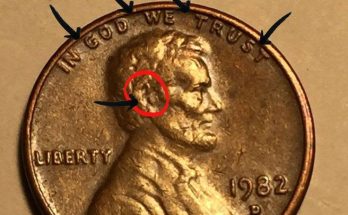
Double Die Errors: Occur when the coin hub imprints an image onto the die multiple times at slightly offset angles, resulting in doubled letters, numbers, or features.
-
Off-Center Strikes: Take place when the blank planchet is not properly aligned inside the press, producing a coin with part of the design missing.
-
Missing Clad Layers: Happen when one of the outer nickel-copper layers fails to adhere to the copper core, leaving one side of the coin looking distinctly reddish-copper.
Step-by-Step: How to Start Hunting
Finding valuable error coins requires persistence, a keen eye, and a systematic approach. You do not need expensive equipment to begin hunting through spare change or bank rolls.
-
Gather Your Supply: Acquire rolls of quarters from your local bank, or collect all the loose change in your home.
-
Set Up Proper Lighting: Work under a bright desk lamp or natural daylight to clearly inspect fine details and surface textures.
-
Use Magnification: Obtain a 10x magnification loupe or coin microscope to spot doubling, repunched mint marks, and small die cracks.
-
Sort by Date and Mint Mark: Group your quarters by year and mint location (P, D, S, or W) to quickly cross-reference with known rare varieties.
-
Check the Weight and Edges: Use a precision jeweler’s scale to weigh suspect coins, as planchet errors usually differ from standard quarter weight.
Should You Get Your Coin Graded?
Before spending money to submit a coin to a third-party grading service like PCGS (Professional Coin Grading Service) or NGC (Numismatic Guaranty Company), evaluate whether authentication makes financial sense.
-
Assess Potential Value: Only consider professional grading if the coin’s estimated value exceeds the combined cost of grading fees, shipping, and insurance.
-
Confirm Authenticity: Consult local coin dealers, community forums, or detailed online guidebooks to ensure the error isn’t post-strike damage (PSD) or intentional plating/damage.
-
Preserve Condition: Place promising coins in protective flips or capsules immediately. Never clean or polish a coin, as chemical or abrasive cleaning severely destroys collector value.
Key Facts:
-
1999 Georgia Experimental Planchet Quarter: Extremely rare transitional error featuring a golden tint and a distinct weight variance.
-
1932-D and 1932-S Washington Quarters: Low-mintage key dates that command premium prices even in lower grades.
-
2004-D Wisconsin Extra Leaf Quarter: Features a prominent extra leaf on the corn stalk (available in “High Leaf” and “Low Leaf” varieties).
-
2019 and 2020 West Point (W) Quarters: Circulated with special “W” mint marks in limited quantities directly into change to encourage coin collecting.
How to Check Your Quarters Properly
-
Examine the Color and Metal: Look for non-standard alloy tones, such as a greenish-gold tint or a solid copper face.
-
Check the Edge (Reeding): Inspect the rim to see if the standard copper stripe is missing, which often indicates an experimental or off-metal planchet error.
-
Check the Weight: Standard modern clad quarters weigh 5.67 grams; off-metal or dime/dollar planchet strikes will weigh noticeably different.
-
Inspect the Lettering: Look closely at words like “UNITED STATES OF AMERICA” and “LIBERTY” for raised doubling or distorted fonts.
Final Thoughts
Coin hunting combines history, research, and the excitement of a real-life treasure hunt. While finding a multi-thousand-dollar rarity takes patience, valuable errors and key dates are still discovered in everyday pocket change. Keep a close eye on your change before spending it—you never know when a rare treasure might pass through your hands.
(Note regarding the thumbnail: The graphic displays the reverse side of a Roosevelt Dime with “ONE DIME” text and sensational clickbait headline numbers, but the core steps above apply directly to searching for high-value quarter and coin errors.)