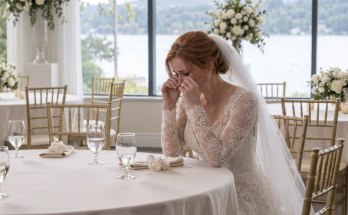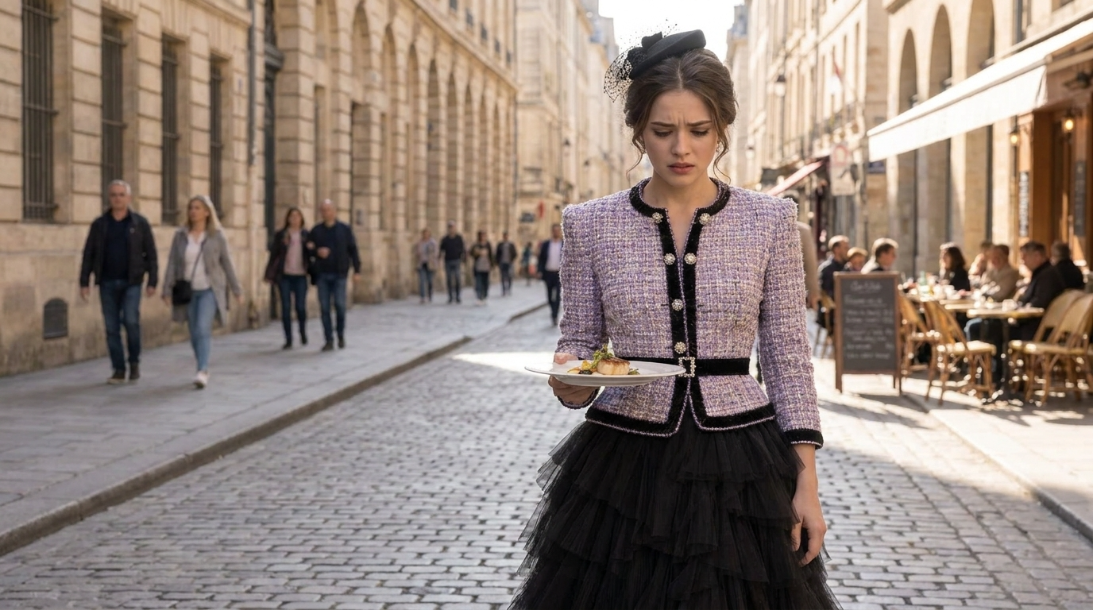
I cooked the dinner, served their drinks, and obeyed without a word.
Later that night, his boss came back for his phone. The moment he saw me, he froze like he had seen a ghost.
Then he asked one question that made my blood run cold:
“Which hospital did you work at years ago?”
That same night, I received a message from an unknown number—and it finally revealed why my husband had been so desperate to keep me hidden from everyone.
PART 1

“My boss is coming over for dinner tonight. Leave the table set and then get inside the bedroom. I don’t want him seeing you like this… you look like a neglected old woman.”
Mariana Torres stood frozen in the middle of the kitchen, holding a wooden spoon in her hand.
She was forty-eight years old. She had spent most of the morning preparing a dinner that her husband, Alejandro, had changed his mind about three times: first he wanted a traditional stew, then roast beef, and finally he decided that something “more elegant” would be better to impress Sergio Mendoza, the regional director of the firm where he worked.
“You want me to lock myself in the bedroom?” Mariana asked softly.
Alejandro didn’t even look up from the hallway mirror as he adjusted the collar of his shirt. “Don’t be dramatic. I’m on the verge of landing a promotion to general manager. Sergio is coming to the house for the first time, and I need everything to go perfectly.”
“It’s my house, too.”
“Which is precisely why I’m asking you for a favor. Serve the dinner and vanish for a little while.”
Mariana felt the familiar knot in her throat that she had spent years learning to swallow down.
The two-story condo was hers. She had purchased it years before they married. For a long time, she had also been a respected trauma surgeon, accustomed to spending grueling hours in operating rooms, making split-second decisions when human lives hung in the balance.
Then, seven years ago, their twelve-year-old daughter, Lucía, died in a tragic car accident.
After that, Mariana left the hospital.
First, she stopped sleeping. Then she stopped answering phone calls. Later, she stopped recognizing the woman staring back at her in the mirror.
Alejandro had stayed by her side during those darkest months. He took her to therapy appointments, cooked when she couldn’t bring herself to get out of bed, and turned down social invitations to stay home with her.
Mariana had never forgotten that.
Perhaps that was why, when his supportive nature slowly morphed into quiet resentment and passive-aggressive jabs, she chose to stay silent.
“I’m the one who had to carry you through it.”
“You’re not the woman I married anymore.”
“Take a look in the mirror before you criticize me.”
Over the years, she had convinced herself that enduring his cruelty was simply her way of paying him back for not abandoning her.
At seven o’clock, Sergio Mendoza arrived.
The moment the doorbell rang, Alejandro transformed. He smiled broadly, spoke with booming confidence, opened an expensive bottle of wine, and welcomed his boss as if he hadn’t spent the last ten minutes humiliating his wife.
Mariana stayed inside the master bedroom.
From there, she listened to Sergio praise the meal. “Your wife’s cooking is incredible, Alejandro. Invite her to sit down with us.”
There was a brief pause.
“She can’t,” Alejandro replied, lowering his voice into a tragic tone. “Ever since the tragedy with our daughter, she’s been extremely fragile. She can hardly tolerate being around strangers.”
Mariana lifted her head, her heart sinking.
“That must be very difficult on you,” Sergio observed sympathetically.
Alejandro let out a heavy sigh. “Well, you don’t abandon someone when they’re broken. I’ve had to cancel business trips, miss important meetings, even pass up career opportunities because she calls me having a panic attack and I have to rush home. Some weeks, she practically doesn’t leave the house.”
Mariana felt an icy chill run down her spine.
It was an absolute lie.
In the last two years, she had never once asked him to cancel a trip. She ran her own errands. She bought groceries. She visited her sister across town. She had even started reading medical journals again.
While she was quietly trying to rebuild her shattered life, Alejandro was at the office spinning a tragic narrative about a helpless, unstable wife who couldn’t survive without his noble sacrifice.
Shortly after nine, Sergio said his goodbyes.
Mariana waited until she heard the heavy click of the front door closing before stepping out to clear the dining table.
Suddenly, a man’s voice called out from the entryway. “I’m so sorry, I forgot my cell phone on the side table!”
Sergio had stepped back inside.
When he looked up and saw Mariana standing by the dining table, he stopped in his tracks. He stared at her for several long seconds, his face draining of color.
“Dr. Torres?”
Alejandro appeared behind him, his expression instantly tightening into panic. “You… you two know each other?”
Sergio didn’t even look at Alejandro. His eyes remained locked on Mariana. “You operated on my son.”
Mariana set the plate down slowly on the table. “What was his name?”
“Daniel Mendoza,” Sergio whispered, his voice trembling slightly. “He was ten years old. He came into the trauma bay at two in the morning after a terrible fall. The ER team told us he probably wouldn’t survive the night.”
The memory rushed back like a bolt of lightning. A pale boy. A terrified father waiting in the corridor. Four agonizing hours in the operating room.
“Daniel…” she breathed.
Sergio smiled, his eyes brimming with sudden tears. “He’s alive, Doctor. He’s twenty-three now.”
Mariana stopped breathing for a second. “Truly?”
“He’s in his final year of medical school,” Sergio said, taking a step toward her. “He wants to be a trauma surgeon. Just like you.”
Sergio pulled out a business card and set it gently on the table. “I’ve spent thirteen years wishing I could find you to say thank you.”
Alejandro stood frozen in the hallway, his jaw clenched, his posture stiff with anger.
When Sergio finally left, Alejandro slammed the front door and whirled around to face his wife. “Did you seriously have to come wandering out the second he walked back in?!”
Mariana stared at him, unable to comprehend his reaction. “That’s what you’re worried about?”
“I’ve spent six months building a professional relationship with that man!”
“And to build it, you told him I was an invalid who can’t handle being around people!”
“Don’t exaggerate!”
“I heard you, Alejandro!”
Alejandro’s face hardened, his tone turning razor-sharp. “So you were eavesdropping on private conversations, too?”
“You told him you canceled business trips because of my ‘crises’!”
“It was just a convenient way to explain certain work issues to management!”
“It never happened!”
Alejandro let out a dry, condescending laugh. “Look at you. One person recognizes you after thirteen years and suddenly you feel like the great Dr. Mariana Torres again.”
The insult landed like a physical blow.
At that exact moment, Alejandro’s cell phone vibrated loudly on the counter. The screen lit up with an incoming text notification.
Mariana caught a glimpse of the message before he snatched the device off the table. It was from a contact saved as Chloe:
“So is he giving you the promotion tonight? After you get it, you’re finally going to tell her the truth, right?”
Alejandro grabbed the phone and jammed it into his pocket.
Mariana slowly lifted her eyes to meet his. “What truth do you have to tell me, Alejandro?”
And for the first time in seven years, she realized that the loss of her daughter might not be the only tragedy that had occurred inside her home.
PART 2
The next morning, Alejandro explained away the text message with an offensive, casual nonchalance.
Chloe, he claimed, was merely a colleague from the corporate finance division. They were strictly discussing the regional promotion. As for “telling her the truth,” he insisted it referred to an upcoming mandatory corporate relocation.
“Adult colleagues text each other after ten at night all the time,” he said dismissively, sipping his morning coffee. “Don’t turn this into another one of your irrational obsessions.”
Before leaving for the office, he offered her a quick, routine kiss on the cheek.
Mariana waited until the garage door closed. Then she called her younger sister, Carolina.
An hour later, Carolina was sitting at the kitchen island, listening in stunned silence as Mariana recounted everything—including Alejandro’s comment before the dinner party that he was embarrassed to be seen with her.
Carolina set her coffee cup down with a heavy clack. “He actually said those words to you?”
“Yes.”
“And you’re still sitting here wondering if you’re the one being dramatic?”
Mariana remained silent.
Carolina reached across the counter and picked up the business card Sergio had left behind. “Call him.”
That afternoon, Mariana walked through the front doors of the hospital for the first time in seven years.
Sergio was waiting for her in the main lobby. Moments later, a tall, slender young man wearing a surgical resident’s coat stepped off the elevator. Daniel had the exact same gentle eyes as his father.
“Dr. Torres,” Daniel said, a nervous, reverent smile breaking across his face. “I grew up hearing your name in our house.”
Mariana felt a quiet ache fracture in her chest—not from grief, but from a long-buried memory of who she used to be.
Daniel showed her the faint surgical scar along his collarbone, telling her it had served as a lifelong reminder that someone had fought for his life when everything seemed hopeless.
A moment later, two familiar voices called out her name. Laura and Andrew, two of Mariana’s former surgical colleagues, came rushing across the lobby. Laura practically threw her arms around Mariana in a tight hug.
“I can’t believe you’re standing here!” Laura cried.
Then Laura’s expression shifted, turning cautious. “Mariana… I came to your house twice after the funeral to check on you.”
Mariana blinked. “What?”
“Alejandro met me at the door both times,” Laura said quietly. “He told me that any mention of the hospital or medicine triggered severe panic attacks for you. He asked us not to come back.”
Andrew nodded in agreement. “He told me the exact same thing over the phone when I tried to invite you to the alumni dinner.”
A cold dread settled deep in Mariana’s stomach.
She had never asked Alejandro to turn her friends away.
Sergio, who had been listening nearby, frowned deeply. “Alejandro has been telling executive management for three years that his home situation limits his ability to travel or work late shifts.”
Every piece of the puzzle slammed into place.
While Alejandro was telling Mariana that her former colleagues had moved on and forgotten her, he was actively warning them to stay away. While he convinced her that no one needed her anymore, he was using her alleged “fragility” to excuse his own professional limitations and play the martyr at work.
Laura pulled a folder from her lab coat, handing Mariana a packet on physician reintegration programs. “No one expects you to walk into an operating room tomorrow, Mariana. But if you want to come back to medicine, there is a path forward.”
Mariana walked home in a daze. She didn’t know yet if she had the strength to be a surgeon again. But for the first time, she understood a crucial distinction: stepping away from the hospital seven years ago had been her choice. Remaining isolated from the world ever since had been his.
That evening, Alejandro sent a text saying he was stuck in late strategy meetings with Sergio and would be home late.
At nine o’clock, Mariana stood by the living room window looking down at the street. A dark sedan pulled up to the curb.
Alejandro stepped out of the passenger side. Driving the car was a woman with sleek dark hair—Chloe, whom Mariana recognized from the company’s executive staff directory.
Before Alejandro closed the car door, Chloe reached across the console and took his hand. Alejandro didn’t pull away. He squeezed her fingers, offering a soft, lingering smile.
It wasn’t a casual gesture between coworkers. It was intimate, practiced, and comfortable.
Five minutes later, Alejandro walked into the condo, tossing his suit jacket onto the sofa. “What a night. Sergio had us locked in a conference room until twenty minutes ago going over the final promotion details.”
Mariana stared at him. Sergio had been at the hospital with his son for the last three hours.
“And what did Sergio decide?” she asked quietly.
“Nothing official yet,” Alejandro lied smoothly.
The next afternoon, Mariana walked directly into Chloe’s office building downtown. She didn’t cause a scene; she simply requested a quiet conversation.
Ten minutes later, they were sitting in a quiet corner booth at a nearby café.
“I assume I know why you’re here,” Chloe said, trying to maintain an air of polished composure.
Mariana looked her dead in the eye. “I want to know what my husband has been telling you about me.”
Chloe’s confidence slowly began to erode under Mariana’s steady, unfazed gaze.
According to Chloe, Alejandro had claimed his marriage was essentially over. He said they had slept in separate rooms for years, that Mariana was an emotional recluse, and that she had given him explicit permission to seek companionship elsewhere. He claimed his doctors had warned that serving her with formal divorce papers could trigger a fatal psychological relapse.
“We share the same bed every single night,” Mariana said flatly. “A month ago, he was planning a anniversary trip to Maine with me.”
Chloe went pale. “He told me he hasn’t touched you in three years.”
“He slept in my bed last night.”
Silence fell over the table.
Chloe’s hands began to tremble as she unlocked her phone. “We’ve been seeing each other for eighteen months.”
Mariana closed her eyes for a brief second. “Did he promise to leave me?”
“First he said after the holidays,” Chloe whispered. “Then he said in the spring. Now he says as soon as his regional promotion is officially finalized.”
Chloe slid her phone across the table. On the screen was a text message sent by Alejandro three weeks earlier:
“She doesn’t even notice what’s going on around her anymore. She lives in her own little world. Once I secure the general manager title, I’ll end it. She’ll throw a dramatic fit, but where is she going to go? She doesn’t know how to survive on her own.”
Mariana stared at the words, feeling a cold, quiet detachment wash over her.
Chloe looked up, her voice dropping. “There’s one more thing.”
“What?”
“He told me that after your daughter died, he only stayed with you because if he walked out then, everyone in your social circle would see him as a monster.”
Mariana sat perfectly still.
As she stood up from the booth, she realized the question was no longer whether her husband was having an affair. The real question was how many years he had been weaponizing the worst tragedy of her life to control the narrative of hers.
PART 3
Mariana returned to the condo shortly before six o’clock.
She didn’t cry. Instead, she retrieved a medium-sized rolling suitcase from the master closet and set it flat by the front door. She left it wide open, completely empty.
When Alejandro unlocked the front door twenty minutes later, he saw the suitcase immediately.
“What is this supposed to mean?” he asked, tossing his keys onto the entryway table.
“We need to talk.”
He let out an exasperated sigh. “Not this again, Mariana.”
“I met with Chloe today.”
Alejandro’s entire posture went rigid. “You went to her office? Are you completely out of your mind?!”
For seven years, that exact accusation—that she was losing her mind—would have been enough to make her retreat, second-guess herself, and apologize.
Not today.
“She showed me your text messages, Alejandro,” Mariana said, her voice entirely devoid of emotion. “She told me you’ve been seeing each other for a year and a half. She told me you claimed our marriage was dead, that we slept in separate rooms, and that imaginary doctors forbade you from asking for a divorce.”
Alejandro’s jaw tightened as he scrambled to regain control. “Chloe misunderstood the context of those conversations—”
“Did she misunderstand when you slept with her?”
Silence.
“Did she misunderstand the lease applications for apartments you were looking at together?”
Alejandro looked away, rubbing the back of his neck. “It was a relationship. Yes.”
Mariana felt a sharp ache in her chest, but no shock. “And last night? When you told me you were in meetings with Sergio?”
“We had dinner!” he snapped. “I wasn’t going to tell you I was meeting her!”
“Of course not. Lying was easier.”
Alejandro threw his suit jacket onto a chair. “What do you want me to say, Mariana?! Our marriage has been dead for years!”
“Then you should have asked for a divorce.”
“When?!” he shouted, stepping closer. “Right after Lucía died?! So your family and all our friends could say I abandoned my grieving wife when she was at rock bottom?!”
The words hung in the quiet air of the living room.
Mariana stared at him, seeing him clearly for the first time in a decade. “So you stayed to protect your reputation.”
Alejandro realized what he had just admitted a second too late. “That’s not what I meant—”
“That is exactly what you said.”
“In the beginning, I stayed because I loved you!” he insisted, his voice rising defensive anger. “Because you were completely broken! I’m the one who dragged you to therapy! I’m the one who cooked your meals! I put up with your sleepless nights for years!”
“And I spent seven years feeling guilty for it,” she replied quietly.
“Guilty? You stopped being a wife! I’d come home from work and find you in the same clothes, reading medical journals for hours, refusing to go out! What did you expect me to do?!”
“I expected that if you stopped loving me, you would have the basic human decency to tell me.”
“It wasn’t that simple!”
Mariana pulled out her phone and displayed the text Chloe had forwarded to her. “‘Where is she going to go? She doesn’t know how to survive on her own.’ Was that complicated, too?”
Alejandro stared at the screen, his face darkening. “I was angry when I typed that.”
“You were also angry when you told my colleagues to stay away from me.”
Alejandro blinked. “What?”
“Laura came to this house twice after the funeral,” Mariana said coldly. “Andrew called. You told them both that hearing about the hospital caused me to have psychological relapses.”
“I was trying to protect you!”
“I never asked you to protect me from my friends.”
“You don’t remember what state you were in!”
“I remember exactly what state I was in seven years ago,” Mariana said, taking a step toward him. “What I want to know is why you were still telling those exact same lies five, six, seven years later.”
Alejandro had no answer.
“You also told Sergio that you routinely passed up career opportunities because of my ‘panic attacks,’” she added. “You turned my grief into a convenient professional excuse for your own failures.”
Alejandro sneered, gesturing toward the open suitcase. “Are you going to pack your bags and leave then?”
“No,” Mariana said smoothly. “That suitcase is for you. You’re leaving.”
Alejandro stared at her, then let out a sharp, incredulous laugh. “To where? This is my home!”
“I bought this condo five years before I met you, Alejandro. The deed is in my name alone.”
“We’ve lived here together for fifteen years!”
“And it ends today.”
Alejandro’s face flushed a deep, furious red. “Do you honestly think you can handle everything on your own?! The mortgage, the HOA fees, the taxes, the maintenance?! You won’t last a single week!”
A week ago, those words would have terrified her. Now, hearing them, Mariana recognized them for what they truly were: not a warning, but a desperate manipulation tactic to keep her small.
“Then we’ll see what happens in a week,” she said quietly.
Alejandro stormed into the master bedroom, slammed drawers shut, and shoved his clothes into the suitcase. Before stepping out the front door, he whirled around. “When this little delusion passes, don’t bother calling me.”
“It’s not a delusion, Alejandro.”
The door slammed shut.
The condo fell into a profound, heavy silence.
Mariana sat down on the sofa. She was terrified—deeply so. But as the quiet settled around her, she discovered something unexpected: the fear of being alone was far smaller than the sheer exhaustion of being continuously degraded.
The following Monday, Mariana met with a family law attorney. Because the property was acquired prior to the marriage and protected under a prenuptial agreement, Alejandro had zero legal claim to the residence.
Next, she called Laura. “I want to know what I need to do to re-enter the medical board certification process.”
Laura’s voice on the line was breathless. “Are you serious?”
“I’m completely serious.”
The first month of retraining was brutal. She spent twelve hours a day studying updated surgical guidelines, pharmacology shifts, and new laparoscopic technologies. There were evenings when she sat at her dining table overwhelmed by self-doubt, wondering if she was insane to attempt a comeback at forty-eight.
One afternoon, Andrew closed a massive textbook sitting in front of her in the hospital library. “You’re not going to reclaim seven years of progress in two weeks, Mariana. Take a breath.”
“I’m terrified I’ve forgotten too much,” she whispered.
“You’ve forgotten some protocols,” Andrew smiled gently. “You haven’t lost your hands or your instincts.”
While Mariana poured herself into her studies, Alejandro discovered that living on constructed fabrications carries steep interest.
Sergio called Alejandro into his executive office late one Friday afternoon. Another senior director was present.
“The executive board’s recommendation for your promotion to regional manager has been officially rescinded,” Sergio announced calmly.
Alejandro stood frozen. “What? Why? My sales metrics this quarter were higher than—”
“Because I discovered you’ve been submitting falsified HR hardship documentation for three years to excuse travel restrictions and missed executive conferences,” Sergio said flatly.
Alejandro’s face drained of color. “Is this because of Mariana? Did she call you?!”
“Mariana didn’t say a single word about you,” Sergio replied, his voice laced with disappointment. “You built an entire tragic narrative about your wife’s mental state to excuse your own workplace shortcomings. If you’re willing to lie about something that personal to excuse your performance, I can’t trust your word running an entire regional division.”
Alejandro walked out of the corporate office in a silent rage. He went straight to Chloe’s apartment, expecting sympathy.
Chloe met him at the door, refusing to let him inside. “We’re done, Alejandro.”
“Mariana manipulated you!” he shouted.
Chloe let out a bitter laugh. “Did she manipulate you into sleeping in her bed every night while telling me you hadn’t touched her in years? You turned your wife into an imaginary invalid just to play the noble martyr. I’m not sticking around to see what tragic story you’ll invent about me when I stop being convenient to you.”
She slammed the door in his face.
Two months later, the formal divorce hearing convened.
Alejandro attempted to request a mandatory court-ordered reconciliation period, arguing that fifteen years of marriage shouldn’t be discarded over a “temporary misunderstanding.”
Outside the courtroom, he approached Mariana in the corridor. “When this little hospital fantasy wears off, you’re going to realize nobody out there needs you.”
Mariana looked at him. For seven years, that sentiment had kept her locked inside a bedroom. Now, it held zero power.
“That phrase worked on me for a long time, Alejandro,” she said softly. “It doesn’t work anymore.”
Suddenly, Alejandro’s mother, Teresa, came walking briskly down the hallway holding an old cell phone. She looked visibly upset.
“I found this old phone in the guest room boxes you left at our house,” Teresa told her son. “I turned it on looking for a contractor’s number.”
Alejandro lunged forward, trying to grab it. “Give me that!”
Teresa pulled back, her face grim. “Explain to Mariana what you wrote about Lucía.”
The air in the hallway went still.
“What did he write?” Mariana asked.
Teresa handed the phone to Mariana. It displayed a text thread between Alejandro and Chloe from a year prior.
Mariana’s eyes scanned down until she found her daughter’s name.
Alejandro: “After Lucía died, she was completely destroyed. In the beginning, she couldn’t even leave the house alone. I knew that if I walked out on her right then, my entire family and everyone at work would view me as a total scumbag.”
Chloe: “So you stayed all these years just because of what people would say?”
Alejandro: “At first it was pity. Then I just got used to it. Divorcing her a year after the funeral would have looked just as bad. Now enough time has passed that I can make a clean break once the promotion goes through.”
Mariana finished reading.
For seven years, Alejandro had used those early months of grief as proof of his heroic sacrifice. Every argument had ended with the exact same line: “I was the one who stayed when everyone else left.”
He had stayed. But he had turned a spouse’s duty during tragedy into an eternal debt she was expected to pay with her dignity.
Mariana looked up from the screen, her voice deadpan. “You weaponized our daughter’s death to make yourself look noble to your mistress.”
“It wasn’t like that!” he stammered, panic finally cracking his posture.
“I just read your exact words, Alejandro.”
Alejandro raised his voice, gesturing wildly. “I was there when you couldn’t get out of bed! I took you to doctors! I made sure you ate!”
“Yes,” Mariana said quietly.
The calm simplicity of her answer completely disarmed him.
“Yes, Alejandro,” she repeated. “You helped me. And I will always acknowledge that. But helping me through my grief did not buy you the right to humiliate me for the rest of my life.”
Teresa wiped a tear from her eye, looking at her son with profound shame. “I defended you, Alejandro. I told Mariana that men make mistakes. I am deeply embarrassed that I ever took your side.”
Alejandro turned on his heel and walked away.
The divorce was finalized four weeks later.
Rebuilding a life at forty-eight is not a cinematic, effortless triumph. It is slow, exhausting work.
Mariana studied until her eyes burned. She failed her first practical simulation assessment and had to retake it. There were shifts when she walked out of the hospital convinced she had made a terrible mistake.
Six months after the divorce, she stepped into an operating room as an attending observer for the first time. As the surgical doors swung shut behind her, a wave of claustrophobia hit her chest.
Laura noticed her hands shaking. “We can step outside, Mariana.”
Mariana closed her eyes. She remembered Lucía as a teenager, teasing her because Mariana always modestly referred to herself as “just a doctor.”
“Someday you’ll realize that saving a life is never ‘just’ anything, Mom,” Lucía had told her.
Mariana opened her eyes, took a deep, steady breath, and adjusted her surgical mask. “No. I’m staying.”
She stayed. First for ten minutes. Then for an hour. Then for an entire four-hour procedure.
Three months later, she completed her first solo surgical procedure since the accident.
When she stepped out of the scrub room and pulled off her gloves, Andrew smiled at her. “How do you feel?”
“Exhausted,” Mariana laughed quietly. “Completely exhausted.”
“Then it went perfectly,” Andrew grinned.
Waiting for her in the hallway was Daniel Mendoza, the young resident whose life she had saved thirteen years ago. He was holding a small vase of fresh white flowers.
“From my dad and me,” Daniel said proudly.
Mariana read the card tucked inside: Thank you for coming back to where you belong.
That evening, she had dinner with Sergio and Daniel. They didn’t talk about Alejandro. They didn’t need to.
Sergio raised his wine glass in a toast. “I still wonder what would have happened if I hadn’t forgotten my cell phone on your side table that night.”
Mariana smiled softly, looking out the window at the city lights. “It probably would have taken me a little longer.”
“To leave him?” Sergio asked gently.
“To remember who I was.”
A year later, Mariana’s life was entirely her own. She bought a charming, light-filled bungalow near the hospital with a small garden out back.
She didn’t harbor hatred toward Alejandro anymore. Hatred required energy she preferred to spend on her patients, her friends, and her own peace.
One morning, before heading into the hospital for an early morning trauma rotation, Mariana paused in her hallway.
She looked at a framed photograph on the console table: Lucía, smiling brightly under the summer sun.
“I’m heading into work now, sweetie,” Mariana whispered softly, touching the edge of the frame.
She picked up her stethoscope, stepped out the front door, and walked into the crisp morning air.
No one was telling her to stay inside a bedroom anymore. And for the first time in seven years, she didn’t need anyone’s permission to live her life.