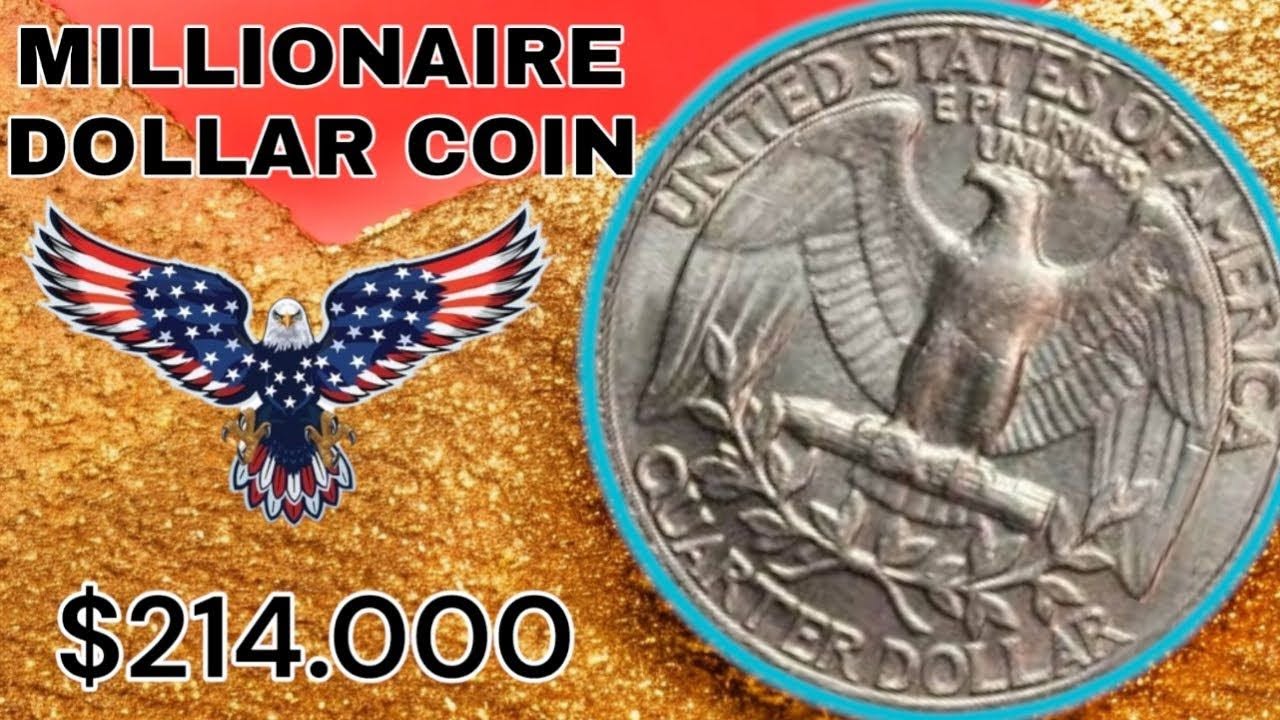
“MILLIONAIRE DOLLAR COIN $214.000.”
While no Washington quarter has ever fetched hundreds of thousands or millions of dollars, key dates, rare mint errors, and top-tier certified condition grades have brought tens of thousands of dollars at public auctions.
The Reality Behind Washington Quarter Values
The Washington Quarter series was introduced in 1932 to commemorate the 200th anniversary of George Washington’s birth. From 1932 to 1964, these quarters were minted in 90% silver, giving even standard circulated coins a baseline metal value well above 25 cents.
-
Circulated 90% Silver Quarters (1932–1964): Worth inherent melt value (typically $4 to $6 depending on silver market prices).
-
Modern Clad Quarters (1965–Present): Base metals (copper-nickel) worth face value unless they feature a severe mint error or represent a rare key date in flawless condition.
Top 5 Most Valuable Washington Quarters to Search For
| Rank | Coin Year & Mint Mark | Why It Is Rare & Valuable | Auction Record / Price Range |
| 1 | 1932-D Washington Quarter | Key date low mintage issue (436,800 produced). Rare in high uncirculated grades. | $89,125 (PCGS MS66) |
| 2 | 1932-S Washington Quarter | Key date first-year issue with low mintage (408,000 produced). | $52,800 (PCGS MS66) |
| 3 | 1950-D/S Overmintmark | Rare variety where a Denver “D” mint mark was stamped over a San Francisco “S”. | $29,375 (PCGS MS66) |
| 4 | 1937 Double Die Obverse (DDO) | Clear doubling on the lettering “IN GOD WE TRUST” and obverse dates. | $22,250 (PCGS MS66) |
| 5 | 1943-S Double Die Obverse (DDO) | Major doubled die error on the front of the coin from WWII production. | $18,800 (PCGS MS66) |
How to Check Your Change for Valuable Quarters
-
Check the Year: Separate any Washington quarter dated 1964 or earlier—these are 90% silver.
-
Look for Mint Marks: The 1932-D and 1932-S are the ultimate prizes of the series; look for the “D” or “S” mark on the reverse below the eagle.
-
Inspect for Doubling: Use a jeweler’s magnifying glass to inspect the lettering for distinct “ghosting” or doubled line edges on the obverse.