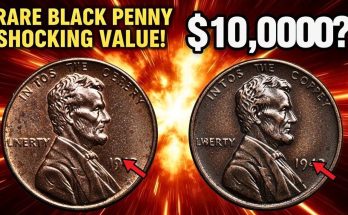
ONLY ONE KNOWN!”, a huge “$ 21 MILLION” claim, money bag graphics, and a black arrow pointing to the “E PLURIBUS UNUM” motto.
While clickbait graphics like this exaggerate prices—the real record price for a Lincoln cent is $1.7 million—the underlying topic of rare Wheat pennies involves immense real-world value.
The Story Behind the Thumbnail: Myth vs. Reality
-
The “$21 Million” Claim: No Lincoln Wheat penny has ever sold for $21 million. The absolute record for any U.S. Lincoln cent is held by the 1943-D Bronze Cent, which sold in a private sale for $1.7 million in 2010.
-
“Only One Known”: The thumbnail points to the phrase E Pluribus Unum (“Out of Many, One”), but the actual “Only One Known” coin refers to the 1943-D Bronze Cent, of which only a single specimen has ever been authenticated from the Denver Mint.
-
The Wheat Design: Designed by Victor David Brenner in 1909, the reverse of the Lincoln cent features two stalks of wheat framing the denomination, symbolizing prosperity and American agriculture.
Top 7 Most Valuable & Rare Wheat Pennies Ever Sold
While $21 million is a sensationalized number, real-world error pennies regularly fetch mid-six-figure to seven-figure prices at auction. Here are seven of the most valuable Wheat pennies in numismatic history:
Why Are These Pennies Worth Big Money?
-
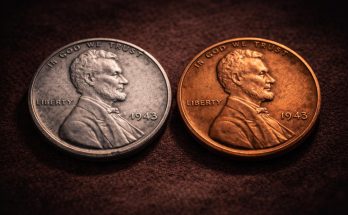
World War II Metal Shortages (1943–1944): During 1943, the U.S. Mint switched to zinc-coated steel to save copper for wartime ammunition. A tiny fraction of bronze blanks from 1942 got stuck in the hopper supply bins and were struck with 1943 dies.
-
Doubled Die Errors: Caused when the coin die receives an offset impression from the hub during creation, producing double-stamped text or images.
-
Low Mintage Key Dates: Coins with original low production numbers (like the 1909-S VDB or 1914-D) in immaculate, uncirculated “Red” condition.
How to Check If You Have a Rare 1943 Copper Penny
-
The Magnet Test: Steel cents coated in zinc will stick to a magnet. Genuine copper/bronze cents will not.
-
Weigh the Coin: A genuine 1943 copper penny weighs approximately 3.11 grams, whereas a steel penny weighs 2.7 grams.
-
Check for Alterations: Watch out for common fakes where a 1948 or 1945 copper cent has been altered to look like a “1943”.