The Rare Mercury Dime Collector & Error Guide
Image Breakdown & Visual Analysis
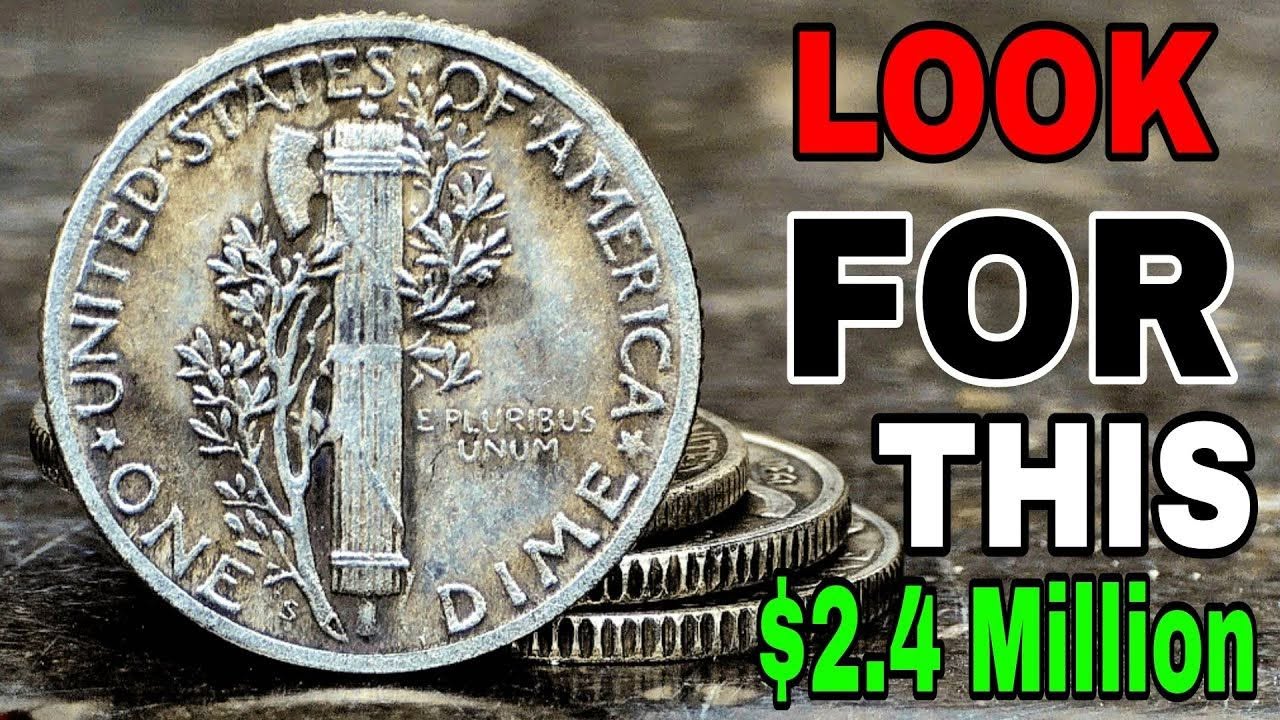
The featured image shows a macro close-up shot of a Winged Liberty Head (commonly known as the Mercury) dime reverse design resting on a small stack of silver coins, paired with sensationalist online thumbnail text:
-
Coin Features: The image shows the reverse side of a silver Mercury dime designed by Adolph A. Weinman. It features the central fasces (a bundle of rods bound around an axe) wrapped in an olive branch, symbolizing strength and peace. The inscriptions read UNITED STATES OF AMERICA, ONE DIME, E PLURIBUS UNUM, and a small S mint mark located near the lower left rim next to “ONE”.
-
Visual Presentation: The coin exhibits a heavily textured, silver-gray patina with bright edge lighting emphasizing the details of the central fasces.
-
Graphic Overlays: High-contrast text on the right reads LOOK FOR THIS in bold red and white, with a lime-green $2.4 Million graphic at the bottom right corner.
Understanding Mercury Dime Values: Fact vs. Fiction
While social media titles routinely tout multi-million dollar evaluations, the real-world value of Mercury dimes (minted from 1916 to 1945) depends on key dates, error varieties, and physical condition grades. Every Mercury dime contains 90% silver, giving even heavily worn examples an inherent melt value above face value, but true collector rarities command substantial auction prices.
Key Factors That Drive Mercury Dime Value
-
Key Dates & Low Mintage: Certain year and mint mark combinations were produced in extremely limited quantities, instantly raising their market baseline.
-
Full Split Bands (FB): On the reverse of a high-grade coin, the central leather horizontal bands binding the fasces must show full, clear, uninterrupted separation. Coins certified with the FB designation trade at massive premiums over standard examples.
-
Major Mint Errors: Double-die obverses, overdates, and off-center strikes create instant numismatic demand.
Top Rare & Valuable Mercury Dimes to Look For
Key Steps for Evaluating Your Coins
-
Locate the Mint Mark: Check the lower reverse field to the left of the fasces base. Look for an S (San Francisco), D (Denver), or no letter (Philadelphia).
-
Check the Date for Overdates: Use a 10x magnifying loupe to inspect 1942 dimes closely; look for the distinct trace of a “1” underlying the second digit “2”.
-
Inspect the Central Bands: Look at the middle horizontal bands of the fasces on the reverse side. If the line splitting the two central horizontal bands is complete and unbroken, the coin may qualify for a higher Full Bands (FB) grade.
-
Preserve the Surface: Never clean, wash, or polish a silver dime. Cleaning scratches the coin’s surfaces and strips away its natural numismatic value.
-
Seek Professional Certification: Submit rare candidates to recognized grading organizations like PCGS or NGC for official authentication.