Why Ordinary Quarters Can Be Worth a Fortune
Most people pass off pocket change without a second thought, but ordinary quarters sitting in your change jar, desk drawer, or car console can carry extraordinary value. While standard state quarters are minted by the hundreds of millions and worth exactly 25 cents, certain rare varieties, mint errors, and historic experimental strikes transform everyday pocket change into high-value collector prizes.
Step 1: Why Error Quarters Can Be Extremely Valuable
Minting currency is an automated process involving heavy machinery operating at extreme speeds. When something goes wrong during production, an “error coin” is created. Because the United States Mint enforces strict quality control, few error coins escape into circulation. Their extreme scarcity, combined with high collector demand, drives up market values.
-
Experimental Planchet Errors: In 1999, while testing manganese-brass compositions for the Sacagawea dollar, the U.S. Mint struck a handful of 1999 state quarters—including Delaware, Pennsylvania, New Jersey, Georgia, and Connecticut—on experimental golden/greenish blanks. These rare transitional errors have fetched thousands at major auctions.
-
Off-Center Strikes: Occur when a blank disc is improperly aligned inside the press, stamping only a fraction of the design onto the coin.
-
Missing Clad Layers: Happen when one of the outer nickel-copper layers fails to adhere to the inner copper core, leaving one side of the coin looking distinctly copper-red.
-
Double Die Errors: Produced when the coining die receives an misaligned imprint from the hub, resulting in clear doubling on lettering or design details.
Step-by-Step: How to Start Hunting
Finding valuable error coins requires a structured routine, patience, and attention to detail.
-
Obtain Coin Supplies: Pick up rolls of quarters from your local bank branch, or gather all loose change around your home.
-
Set Up Bright Lighting: Place your coins under direct overhead lighting to easily spot subtle color variations, mint marks, and surface textures.
-
Use Magnification Tools: Inspect details using a 10x jeweler’s loupe or USB digital microscope to locate die cracks, repunched mint marks, and doubled lettering.
-
Sort by Year and Mint Mark: Organize your quarters by production year and mint facility (‘P’, ‘D’, ‘S’, or ‘W’) to spot rare mintage runs quickly.
-
Check the Weight and Rim: Use a precision digital scale to check for anomalous weights (e.g., experimental planchets weigh heavier than standard clad quarters).
Should You Get Your Coin Graded?
Before submitting a coin to third-party grading agencies like PCGS or NGC, assess whether the investment is justified.
-
Evaluate Financial Viability: Ensure the estimated market value of the error outweighs grading fees, handling, and insured shipping costs.
-
Rule Out Novelties & Damage: Countless quarters were plated or altered after leaving the Mint. Post-mint damage or private plating holds no collector premium.
-
Avoid Cleaning: Never polish or chemically wash a coin. Cleaning causes permanent surface damage and destroys numismatic value. Store prospective finds in soft protective flips.
Key Facts:
-
1999-P Connecticut Experimental Quarter: Features a distinct greenish-gold tint, lacks the standard copper edge stripe, and weighs heavier than standard quarters.
-
2004-D Wisconsin Extra Leaf: A popular modern variety showing an extra leaf on the ear of corn (High Leaf or Low Leaf).
-
2019/2020 West Point Quarters: Circulated with the rare ‘W’ mint mark directly into change to encourage coin collecting.
-
1932-D & 1932-S Washington Quarters: Classic low-mintage key dates that remain highly valuable even in worn condition.
How to Check Your Quarters Properly
-
Inspect Color and Tone: Look for unusual metallic tints, such as a golden hue indicating an experimental planchet or a solid copper face indicating a missing clad layer.
-
Examine the Edge (Reeding): Check the coin’s rim. Standard quarters feature a distinct copper stripe, whereas experimental planchet errors lack the copper stripe entirely.
-
Weigh the Coin: A standard modern clad quarter weighs 5.67 grams. Experimental Sacagawea planchet errors typically weigh between 5.9 and 6.3 grams.
-
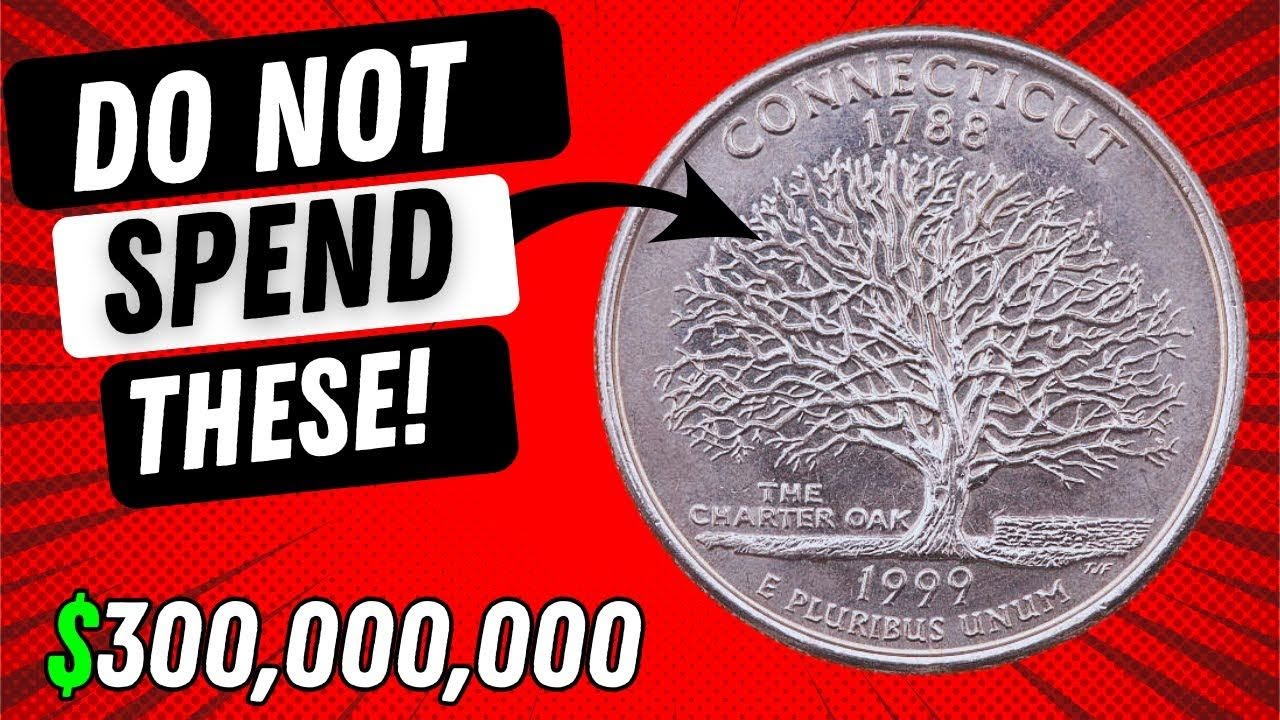
Verify Inscriptions: Check wording like “THE CHARTER OAK” and “CONNECTICUT 1788” for raised die cracks, doubling, or missing letters.
Final Thoughts
Coin collecting combines history, research, and the excitement of a real-life treasure hunt. While true multi-thousand-dollar mint errors like the 1999 Connecticut experimental quarter are exceedingly rare, millions of quarters pass through hands daily. Taking a few extra seconds to inspect your change before spending it might just uncover a hidden gem.
(Note regarding the attached thumbnail: The image showcases the reverse side of the 1999 Connecticut State Quarter featuring “The Charter Oak” design paired with sensationalized text, but the steps above outline the realistic methods for identifying valuable error quarters.)