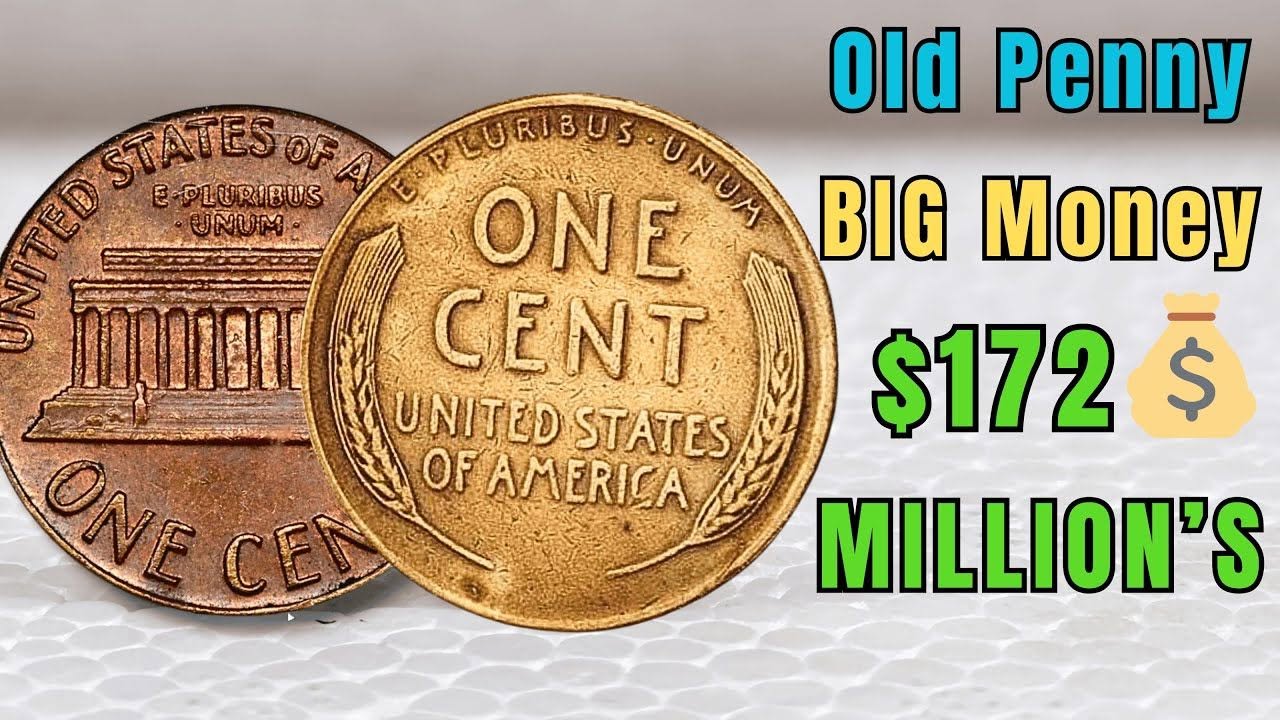
The primary difference between a Wheat Penny and a standard One Cent Coin lies in their reverse design, age, metal composition, and collectible market value. While both feature Abraham Lincoln on the front (obverse), the reverse design and metallic content changed significantly over time.
Detailed Comparison: Wheat Penny vs. Modern One Cent Coin
| Feature | Wheat Penny (1909–1958) | Modern Lincoln Cent (1959–Present) |
| Reverse Design | Two ears of durum wheat framing “ONE CENT” | Lincoln Memorial (1959–2008) or Union Shield (2010–Present) |
| Metal Composition | 95% Copper, 5% Tin/Zinc (1943 was Zinc-coated Steel) | 97.5% Zinc, 2.5% Copper core plating (Post-1982) |
| Weight | 3.11 grams (1943 Steel: 2.7g) | 2.50 grams |
| Designer | Victor David Brenner | Frank Gasparro (Memorial) / Lyndall Bass (Shield) |
| Base Market Value | 3¢ – 10¢+ (Melt & collector base) | 1¢ (Face value) |
Key Differences Breakdown
1. Reverse Design & Historical Eras
-
Wheat Penny (1909–1958): Designed by Victor David Brenner to commemorate Abraham Lincoln’s 100th birthday in 1909, the reverse features two curved stalks of wheat flanking the words “ONE CENT” and “UNITED STATES OF AMERICA”.
-
Lincoln Memorial Cent (1959–2008): Introduced on Lincoln’s 150th birthday, replacing the wheat ears with the Lincoln Memorial building.
-
Union Shield Cent (2010–Present): Features a 13-stripe shield symbolizing national unity on the reverse.
2. Metal Composition & Weight
-
Pre-1982 (Copper Era): Wheat pennies (and early Memorial pennies struck before mid-1982) are made of 95% solid copper and weigh 3.11 grams. Copper content alone gives these coins an intrinsic metal value worth roughly 2 to 3 cents.
-
Post-1982 (Zinc Era): Due to rising copper prices, the U.S. Mint transitioned in 1982 to a core composed of 97.5% zinc with a thin outer plating of pure copper, reducing the weight to 2.50 grams.
Which Is Worth More?
As a general rule, Wheat Pennies are worth more than modern One Cent coins.
-
Circulated Common Wheat Pennies: Most common date Wheat Pennies in average circulated condition sell for 3 cents to 15 cents each, making them worth 3x to 15x their original face value simply due to age and copper content.
-
Modern Pennies: Post-1982 pennies are generally worth only 1 cent, unless they carry a rare minting error or high-grade uncirculated status.
Top Key Dates & Error Rarities to Watch For
While common Wheat Pennies carry modest premiums, specific key dates and minting mistakes command thousands of dollars at auction:
-
1909-S VDB Wheat Penny: The most famous key-date Wheat cent. Features the designer’s initials “V.D.B.” on the bottom reverse. Worth $700 to $3,000+ depending on condition.
-
1914-D Wheat Penny: Low mintage key date worth $150 to $1,000+ even in heavily worn condition.
-
1943 Copper Wheat Penny: A famous error. In 1943, pennies were struck in zinc-coated steel for World War II efforts. A few copper blanks were accidentally struck, fetching $100,000 to $1,000,000+.
-
1944 Steel Wheat Penny: The counterpart error where steel planchets left over from 1943 were struck with 1944 dies. Worth $30,000 to $100,000+.
-
1955 Doubled Die Obverse (DDO): Extreme doubling on the date and lettering of the obverse makes this one of the most recognizable errors, valued at $1,000 to $5,000+.
-
1982-D Small Date Copper Memorial Cent: A rare transition error where a 1982-D small date penny was struck on a 3.11g copper planchet instead of zinc, worth $10,000+.