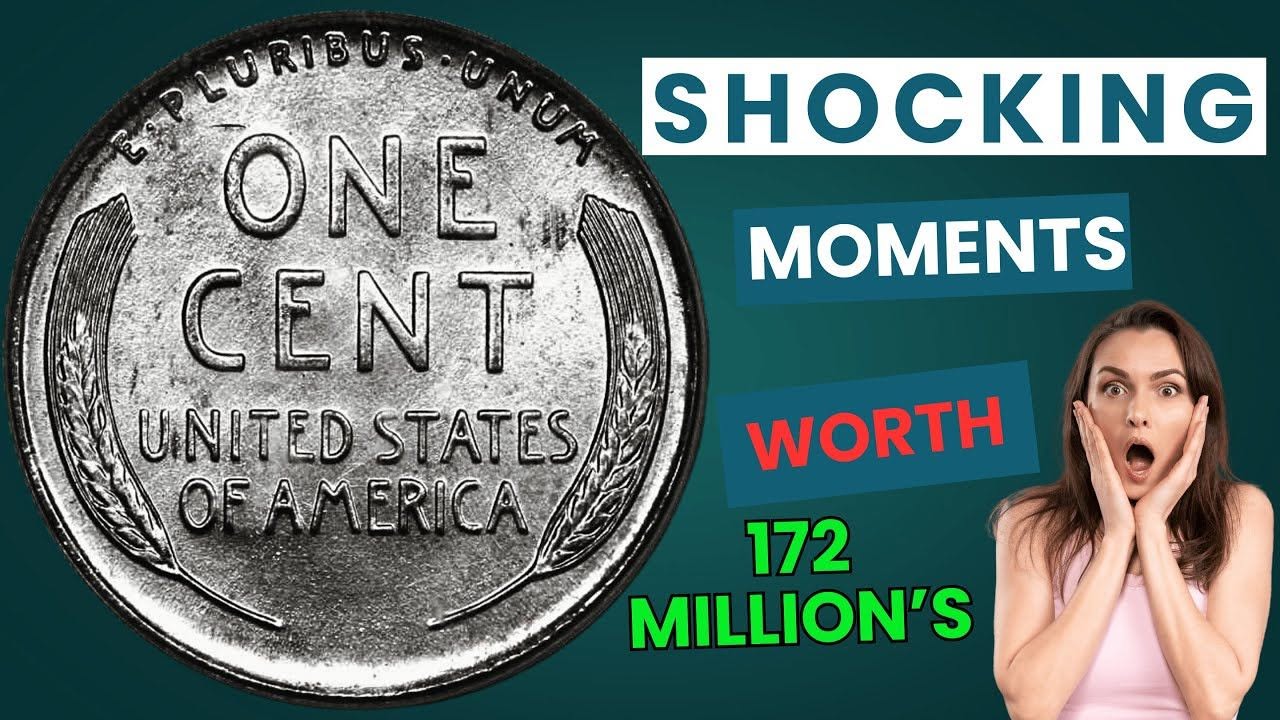
“SHOCKING MOMENTS WORTH 172 MILLION’S” and a shocked stock photo reaction.
While no single coin in world history has ever fetched $172 million, the 1943 wartime cent series and rare mint error quarters remain central to real-world numismatic treasures that sell for thousands to millions of dollars.
Step 1: Why Error Quarters Can Be Extremely Valuable
Coin values soar when high demand intersects with extreme scarcity, and nothing creates scarcity quite like a manufacturing error at the U.S. Mint. During high-speed production, millions of coin blanks (planchets) pass through heavy presses. When automated systems misfeed or dies degrade, rare mint error coins are born.
-
Off-Metal & Wrong Planchet Errors: These occur when a blank intended for one coin ends up in a press set up for another. A prime example is the 1943 copper penny error, where copper planchets were accidentally struck with 1943 steel cent dies, as well as state quarters struck on silver or nickel planchets.
-
Doubled Die Errors (DDO/DDR): Caused during die manufacturing when the design hub strikes the steel die slightly off-center multiple times. This leaves distinct, crisp doubled outlines on text and numbers (such as the famous 1958 Doubled Die Lincoln Cent or 1937 DDO Washington Quarter).
-
Mule Errors: The holy grail of mint errors, occurring when two dies intended for completely different coin denominations are paired together—such as the famous Sacagawea Dollar obverse struck with a Washington Quarter reverse.
Step-by-Step: How to Start Hunting
You don’t need a massive bank account to start finding rare error quarters, valuable pennies, or silver coins in circulation.
-
Assemble Your Tool Kit: Grab a 10x jeweler’s loupe or a cheap USB digital microscope, a digital gram scale precise to $0.01\text{g}$, and a strong neodymium magnet.
-
Buy Coin Rolls (“Coin Roll Hunting”): Visit your local bank branch and purchase $10 boxes of pennies or $500 boxes of quarters at face value.
-
Sort by Year & Metal Composition:
-
Quarters: Pull all Washington quarters dated 1964 or earlier (they contain 90% silver). Look for 1999–2008 State Quarters with unusual goldish hues or missing edge clad layers.
-
1943 Cents: Test every 1943-dated penny with a magnet. Standard 1943 steel cents will snap directly to the magnet. If you find a 1943 penny that does NOT stick to a magnet, weigh it immediately—if it weighs roughly $3.11\text{g}$, you may have found a genuine 1943 bronze error.
-
-
Inspect Lettering & Mint Marks: Look closely at key phrases like “IN GOD WE TRUST” or “LIBERTY” for doubled letters, die cracks, or missing characters.
Should You Get Your Coin Graded?
Professional authentication and grading from top third-party services like PCGS (Professional Coin Grading Service) or NGC (Numismatic Guaranty Company) encases your coin in a tamper-evident slab and assigns it a official numeric grade from 1 to 70.
| Factors | Send for Professional Grading IF… | Keep Raw / Uncertified IF… |
| Market Value | The coin’s estimated market value is over $100–$150. | The coin is only worth a few dollars or face value. |
| Authenticity Concerns | You suspect a major error or rare key date (e.g., 1943 copper penny, 1932-D quarter). | The error is a minor machine doubling or common mechanical abrasion. |
| Coin Condition | The coin is in pristine, uncirculated “Mint State” condition without scratches or cleaning marks. | The coin is heavily corroded, worn flat, or damaged by harsh cleaning. |
Crucial Tip: Never clean your coins with chemical polish, baking soda, or brushes. Cleaning creates micro-scratches that strip away original mint luster, reducing a coin’s collector value by up to 90%.
Final Thoughts
Sensational social media graphics claiming “$172 Million” are designed to catch your eye, but the underlying excitement of pocket-change hunting is genuinely real. Rare error quarters, wartime composition mistakes, and top-grade silver coins still pass through hands, cash registers, and bank rolls every day. With a basic magnifying loupe, a scale, and a bit of patience, anyone can turn everyday spare change into a rewarding numismatic hunt.